




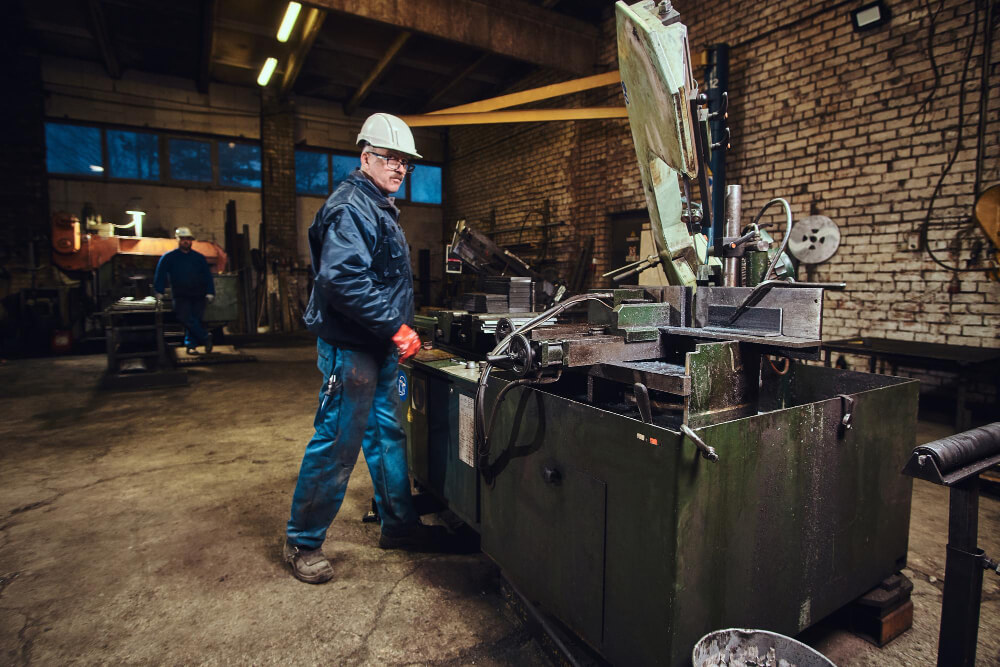
A long-awaited event has occurred in the Russian machine tool market — the country's largest production of cutting tools for CNC machines has been launched in Saint Petersburg. The new enterprise is capable of replacing up to 40% of imports in a strategically important industrial sector.
Saint Petersburg plant Virial has opened a large-scale production of metal-cutting tools, which serves as a response to the acute need of Russian enterprises for high-quality domestic equivalents. Following the exit of European manufacturers from the Russian market, who previously held 70% of the market, establishing domestic production became a matter of national technological security.
The project was implemented with the support of the Industrial Development Fund, which provided a concessional loan of 1 billion rubles at 1% per annum. Total investment amounted to 1.25 billion rubles. As noted by Vladimir Rumyantsev, General Director of the company, this support enabled the purchase of approximately 50 units of modern equipment and the development of products capable of competing with global equivalents.
Production is located at the Voskov Technopark in Sestroretsk, where it is planned to annually produce up to 6 million carbide inserts and 120 tons of tool blanks. A key feature of the enterprise is the full production cycle from powder to finished product, ensuring 100% localization. Raw materials are supplied from enterprises in the Bryansk and Sverdlovsk regions.
Some of Virial's products have no domestic equivalents. Specifically, the plant has mastered the production of the first Russian inserts for parting-off operations and rods with helical coolant holes. These products have already undergone testing at the facilities of key customers — UAC, UEC, USC, and Rosatom.
According to expert Vladimir Serebrenny, Virial's products meet international standards while being 15-20% cheaper than foreign equivalents. This allows the company to expect an increase in market share for inserts from 2% to 10%, and for blanks from 10% to 40%.
The company is not stopping there. As Vladimir Rumyantsev reported, plans include further capacity expansion and the creation of a fully robotic production facility. By the end of 2025, it is planned to launch the next expansion phase with an investment volume 2-3 times larger than the current project.
The Virial plant, founded in 1991 by scientists specializing in high-temperature materials, is today included in the list of backbone enterprises of Russia and Saint Petersburg. Its facilities in the Northern Capital employ 580 staff members contributing to the country's technological sovereignty.